
Sowing transformative change from the vestiges of a peri-urban wetland in Mexico City
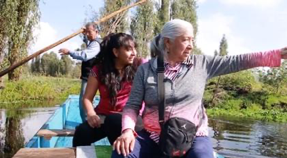

A major challenge in academia when conducting participatory action research on social-ecological issues is how to engage local communities as collaborators rather than mere objects of study. As numerous studies have increasingly shown, this shift is fundamental to restoring human-nature relationships and enhancing more meaningful research practice and impacts.
At the Mexico City Node of the Water Trans-Path-Planning project, we have sought to apply collaborative methodologies that focus on horizontal and ethical perspectives. Central to our node work is to explore how the fragmented social fabric has persisted in resisting degradation and how it might be strengthened through learning exchanges that empower local actors towards enacting sustainable desired futures.
Authors & Contributors

Beatriz H. López Arboleda
Claudia Medina Castillo
Patricia Pérez-Belmont
Lakshmi Charli-Joseph
Citation